

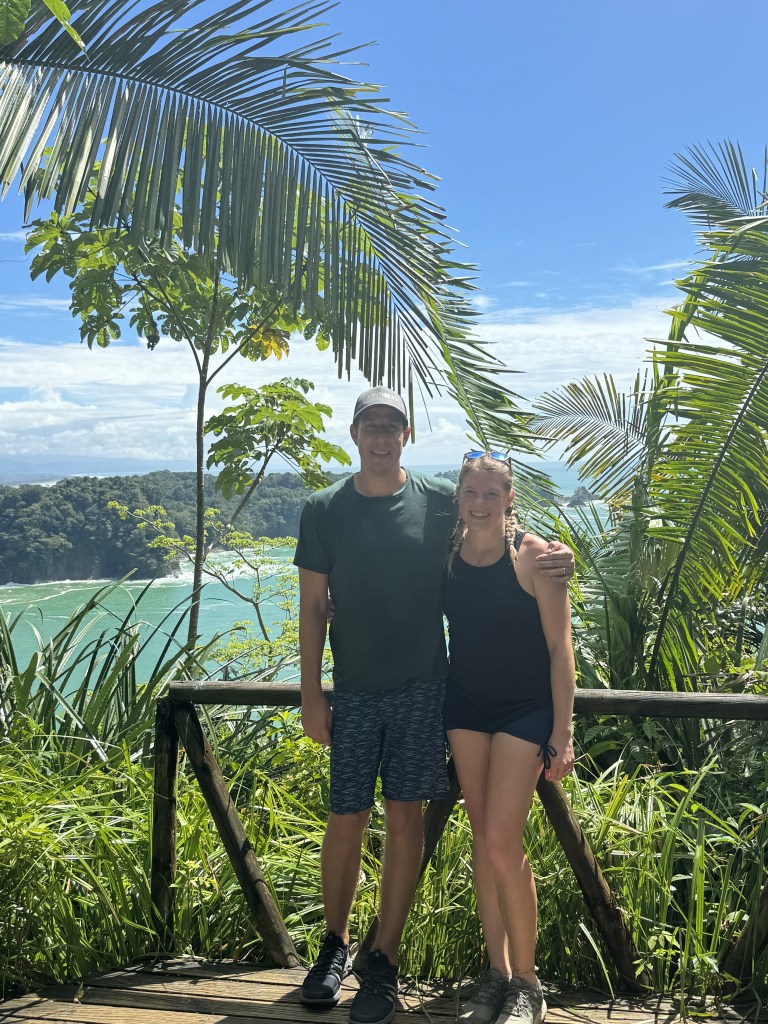
This week, we ventured into Manuel Antonio National Park, one of Costa Rica’s most famous destinations. Known for its abundant wildlife, scenic hiking trails, and stunning beaches, it’s no surprise the park has become a magnet for tourists. Despite the crowds, we set out to see if it still lives up to its reputation—and spoiler alert—it does!
Getting There and Insider Parking Tips
We arrived at 7 AM, right when the park opens, which is the best time to visit if you want to avoid the midday rush. Tickets can be purchased in advance online since daily entries are limited. When we drove to the park, a man insisted we couldn’t park near the entrance and needed to pay $10 for his lot. Pro tip: Don’t fall for this! There are free parking options nearby if you’re willing to look around. Many people around the park wear badges so they look like they officially work for the park, when in reality they don’t.
Entering the Park: Guides vs. Going Solo
At the entrance, you’ll notice many guides carrying scopes to help visitors spot wildlife. While guides are great for detailed animal spotting, we opted to explore on our own. Adam is a great wildlife guide, so we felt confident finding animals ourselves—and we like to keep our pace a little quicker.
Beaches and Wildlife
Our first stop was the beach closest to the entrance. Morning swims here are the best, as the area gets crowded later in the day. The trail takes you right to the beach, but if you want to have more privacy, keep walking across to the opposite side of the trail and you will get to the less populated beach. While strolling along the shore, a bold coati crossed our path, unfazed by our presence. In a nearby tree, we spotted two two-toed sloths, known for their lighter fur and larger size. Though Manuel Antonio is famous for its sloth sightings, these were the only ones we saw that day.
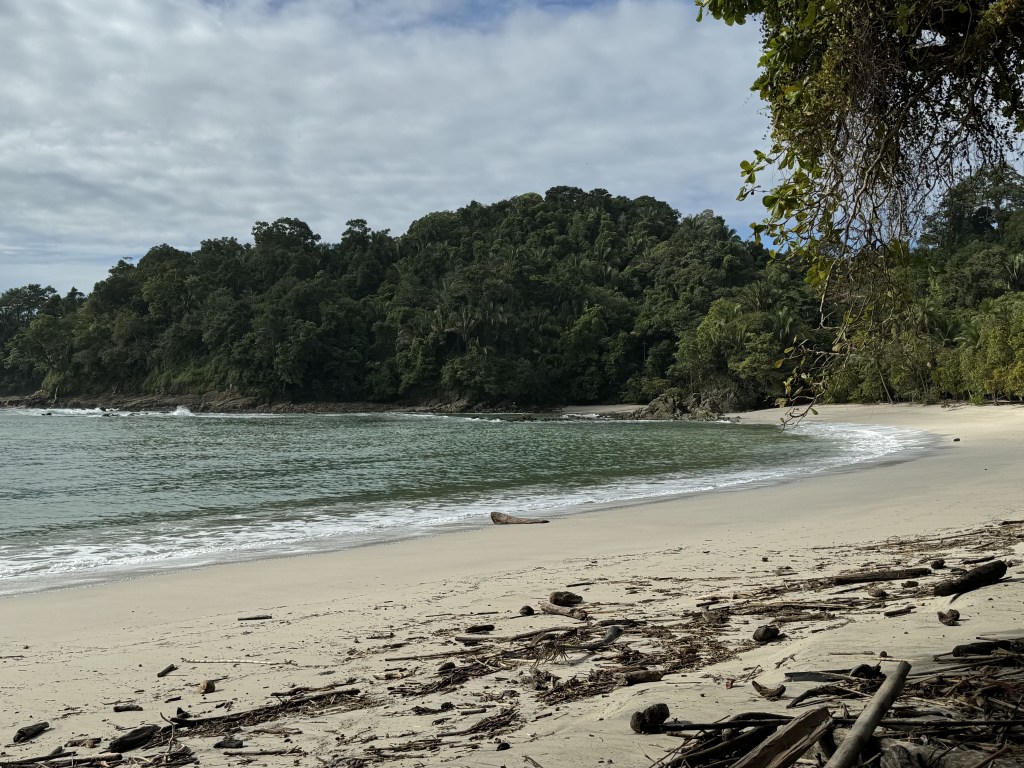
The white-faced capuchin monkeys were everywhere near the beach. These cheeky creatures are notorious for stealing food and backpacks, which is why food isn’t allowed inside the park. Fun fact: The ban was implemented after the monkeys’ junk-food diets caused health issues like diabetes. If you get hungry, the park has an enclosed café where you can grab a bite without worrying about animal theft.


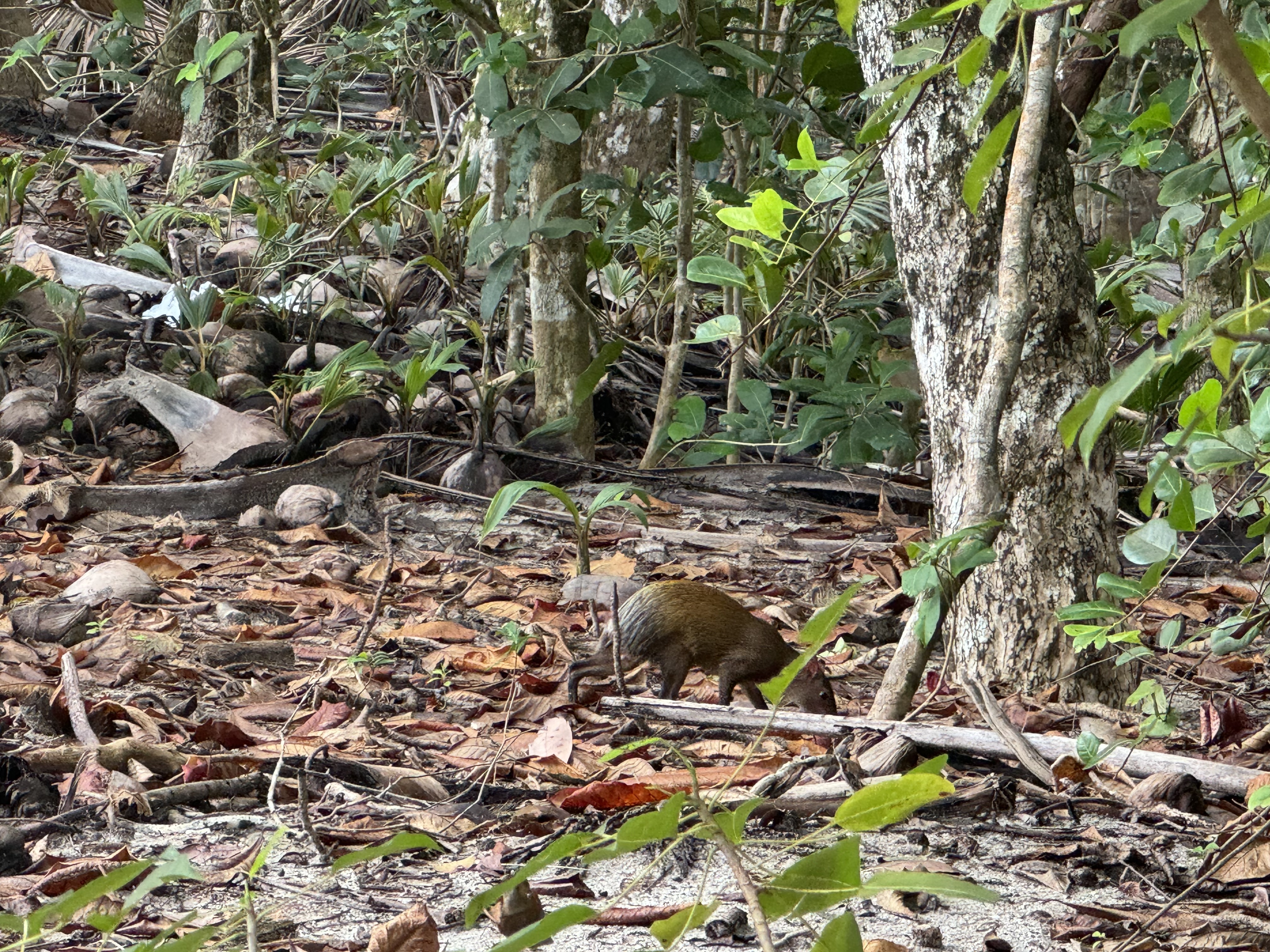
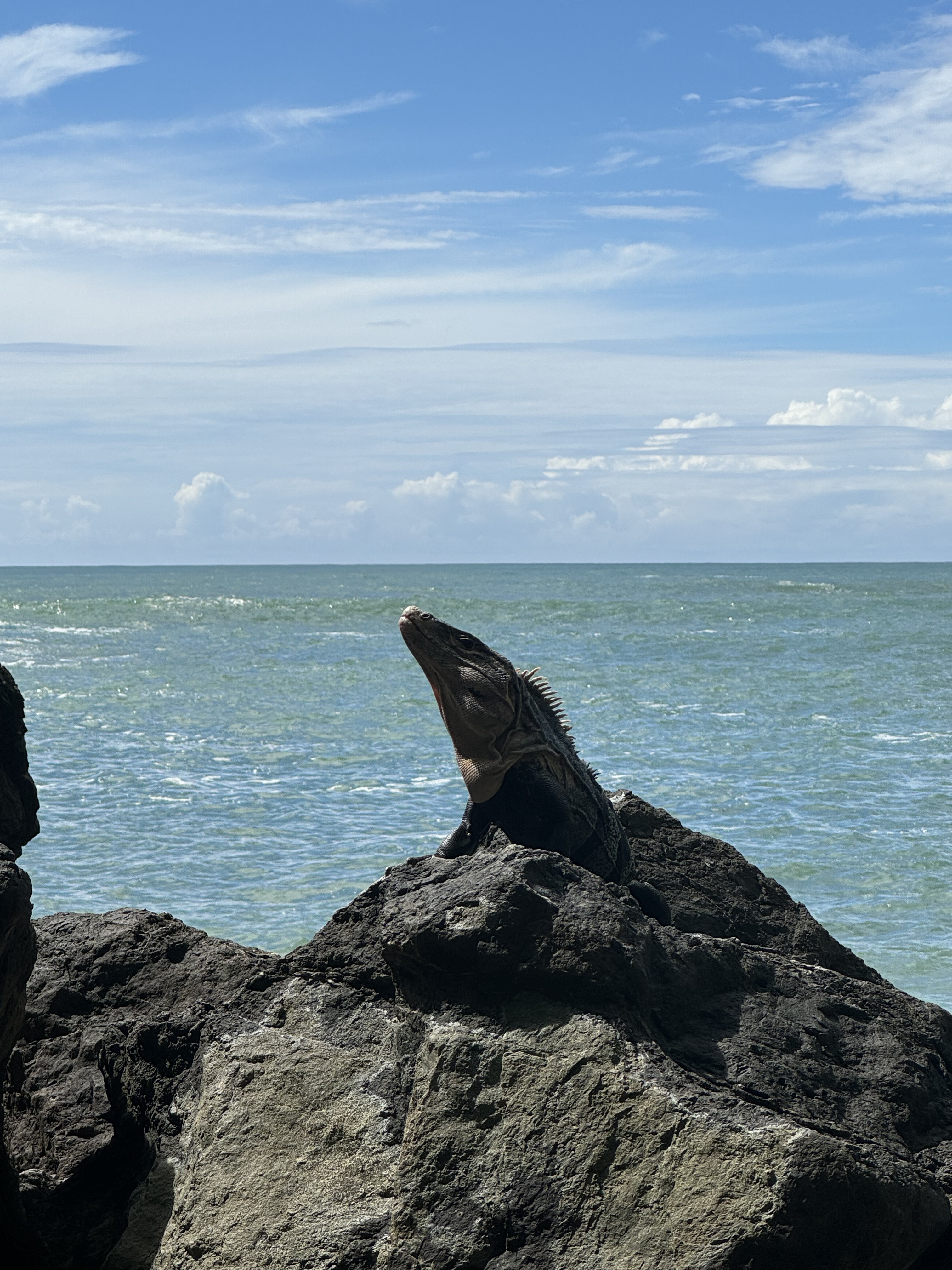
We also spotted several agutis, small, rodent-like animals resembling mini capybaras. Typically shy, these little critters are easier to photograph in Manuel Antonio, as the animals here are more accustomed to humans. On the beach, black iguanas lounged in the sun, some even engaging in territorial battles. While they look lazy, remember, they have sharp teeth, so admire them from a distance!
Hiking Trails and Hidden Gems
We hiked every trail in the park, saving the Mirador Viewpoint for last. Big mistake! The steep stairs combined with the midday heat made it a challenging climb. If you’re visiting, tackle this trail early in the morning to enjoy the view without overheating. Along the way, we heard howler monkeys, though they stayed hidden. Luckily, a troop of squirrel monkeys (mono titi) made an appearance, delighting us with their playful antics and tiny size.
The key to escaping the crowds? Just keep hiking. Most visitors stick to the main areas near the café and beach, where guides lead groups. If you want a more private experience, hike farther into the park or explore the less-trafficked trails. The farther you go, the more wildlife you’ll encounter and the quieter it gets.
Why Manuel Antonio is Worth It
Manuel Antonio remains one of Costa Rica’s most beautiful and accessible parks. Its mix of impressive wildlife, pristine beaches, and easy trails make it ideal for families and first-time visitors. The nearby towns of Manuel Antonio and Quepos offer plenty of activities, from ziplining to boat tours, making this area a fun hub for adventure.
Visiting this park also supports conservation efforts. Manuel Antonio generates significant revenue that helps fund Costa Rica’s entire national park system, preserving the country’s incredible biodiversity.
Final Tips
- Arrive early to beat the crowds and heat. Also, animals are more active first thing in the morning.
- Buy tickets online in advance to secure your spot.
- Avoid parking scams by scouting free spaces nearby.
- Bring a swimsuit for a morning dip and enjoy the beach before it fills up.
- Hike farther to find quieter spots and better wildlife viewing opportunities.
Whether you’re a wildlife enthusiast or just looking for a day of exploration and relaxation, Manuel Antonio National Park is a must-see. Just don’t forget your camera—you’re bound to make some unforgettable memories!
 PELIGRO LIFE