

Thursday, January 9, 2025
Thursday started like any other day. We woke up early for a three-mile beach hike at Playa Langosta, the closest beach to our Airbnb. After cooling off in the ocean, we headed down the sandy road toward the main highway. As we approached the highway, I noticed a line of stopped cars.
“Ugh, traffic! Must be construction,” I sighed.
But Adam, ever curious, said, “No, there’s something in the road. We need to check it out!”
He quickly pulled the car over. To our surprise, a group of Ticos were gathered around trying to help a baby howler monkey that was limping across the road with a clearly broken leg. The Ticos explained they needed to head back to San José and couldn’t take the monkey with them. Without hesitation, Adam and I offered to step in.

Rescuing the Little Howler
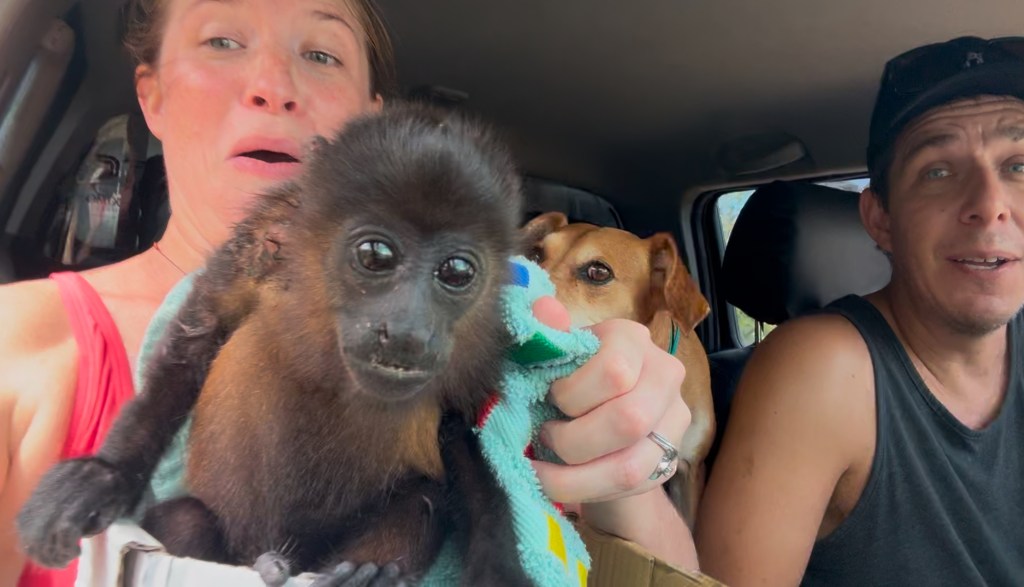
We carefully wrapped the monkey in a towel and placed her in a box on my lap. She clung to the edge of the box with her tiny hand, and I draped the towel over her head to help her stay calm. Suddenly, she stood up and started screeching! Unsure of what to do, I panicked, worried she might bite. Adam took over momentarily, enduring a quick “poop incident” before passing her back to me. Once I had her securely wrapped in the towel, she finally calmed down. She is a baby, so she needs to hold onto something like she would with her mom.
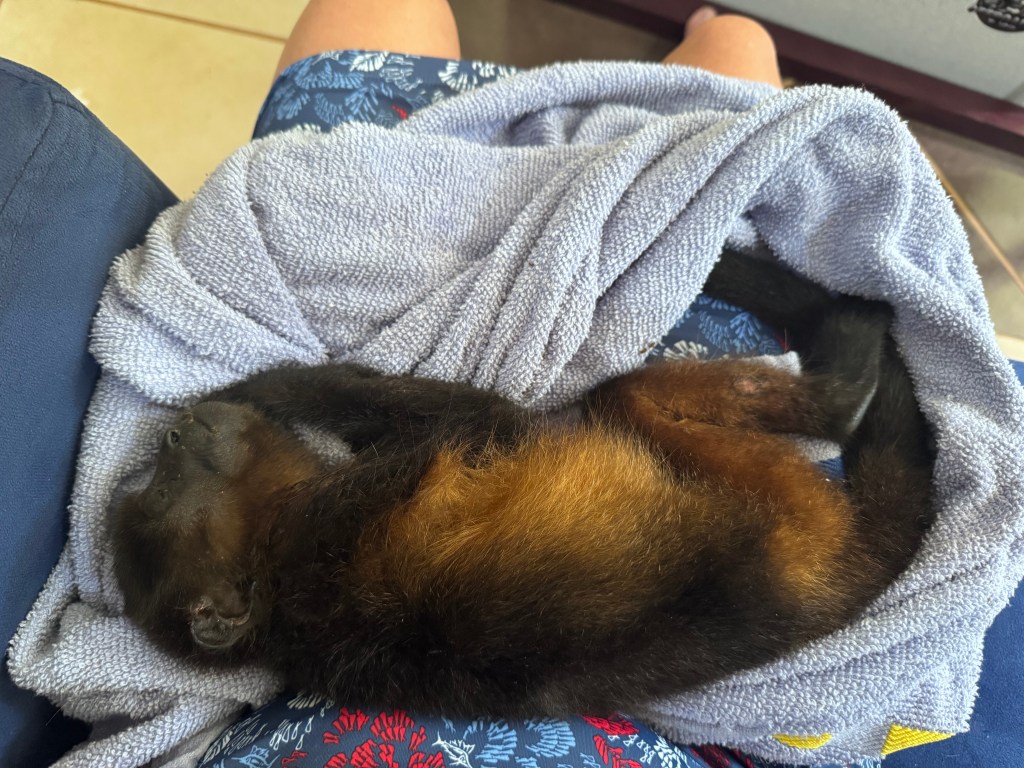
When we got home, Adam sat with her, and she snuggled into his arms, falling into a deep, snoring sleep. It was heartwarming to see her finally relax after such a traumatic ordeal.

The Challenge of Finding Help
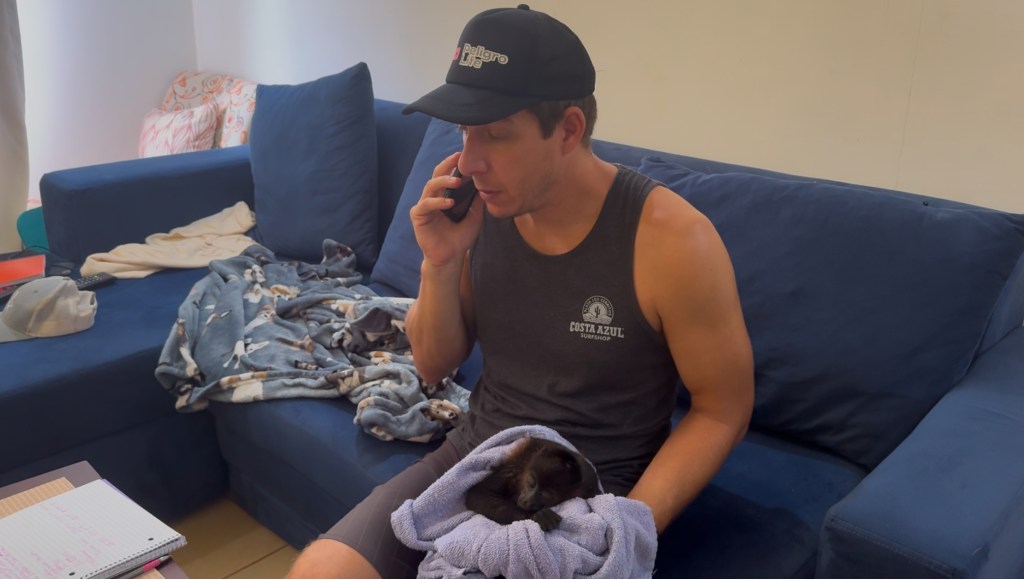
I thought it would be easy to find a rescue center, but I was wrong. The first place we called confirmed they took howler monkeys but wasn’t open that day. Waiting until tomorrow wasn’t an option given her injuries: a broken leg and lacerations on her head, ear, neck, chest, and leg. We kept calling wildlife centers across Guanacaste, but many didn’t answer, couldn’t take monkeys, or were at capacity.
Just when we were running out of options, our friends Adriana and Jorge saw our Facebook post and stepped in to help. Through their network, they connected us with the manager of the International Animal Rescue Costa Rica center in Nosara. Initially, the center’s staff said they were closed, but after speaking with the manager, we were reassured they accept animals 24/7. Relief washed over us!
The Journey to Nosara
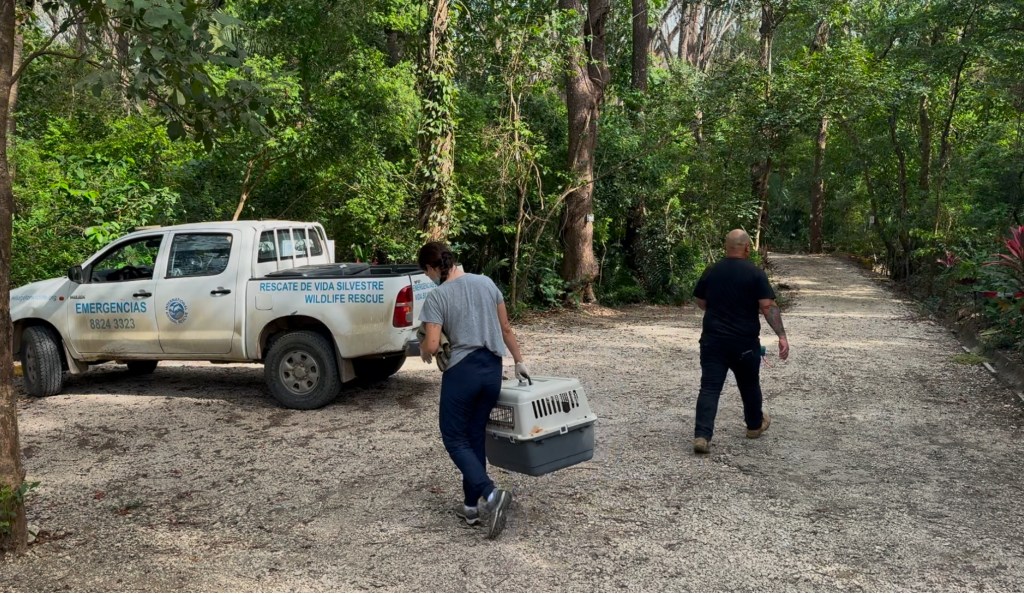
Nosara is about an hour away from our house, accessible only by a long and bumpy dirt road. The little monkey slept in my arms the entire ride. When we arrived, the center’s owner and vet met us outside to take her in. It was bittersweet handing her over. We had grown attached, but we knew this was the best place for her recovery.
The vet examined her and explained that she’d likely been attacked by an animal but should make a full recovery. Once healed, the center plans to release her back into the wild to join a local howler monkey troop. Who knows? Maybe one day we’ll hear her iconic howl again!

About the International Animal Rescue Costa Rica
This nonprofit organization operates wildlife centers worldwide, and the Nosara location is the only one in Central America. They care for over 400 animals and focus solely on their health and well-being, without profiting from tourism. It’s truly an inspiring place.
The Decline of Howler Monkeys
Howler monkey populations in Costa Rica are declining due to habitat loss. More roads mean more roadkill. More power lines mean more electrocutions. More homes mean more dog attacks. It’s heartbreaking, but there are ways we can help.
How You Can Help
One effective solution is building monkey bridges. These rope ladders stretch across highways, providing monkeys a safe way to cross roads that are more natural, like a vine. While these bridges are fantastic, they’re costly, and Costa Rica needs a lot of them. In Guanacaste, we’ve seen monkey bridges every 10 miles or so, but they’re much rarer in the southern zones.
You can donate to help build monkey bridges through organizations like the Sibu Wildlife Sanctuary. If you know of other initiatives, please share in the comments! We’re actively looking for ways Peligro Life can contribute to this vital cause.
Watch the Whole Thing Unfold on Our Peligro Life YouTube Channel
And Look How Cute She Is!
Rescuing the baby howler monkey was a profound experience. It reminded us of the fragility of Costa Rica’s wildlife and the importance of protecting it. Let’s all do our part to ensure these incredible animals have a future. And if you’re ever in Costa Rica, keep an eye out for the haunting yet beautiful call of the howler monkey—a sound you’ll never forget.
 PELIGRO LIFE